
TCF Canada Compréhension Orale: Listening Test Format, Audio Practice Questions & Score Chart

Simar Dua · French Program Lead
Updated:
The compréhension orale is the listening test of the TCF Canada: 39 multiple-choice questions, about 35 minutes, four options each, and every recording played once. The questions start at A1 with one picture and four short sentences you hear, and end at C2 with a minute-long radio extract and four answers that all sound plausible. The test gives one score on the 100 to 699 scale, and IRCC converts that score to one of the four NCLC levels that Express Entry reads.
It is also the part of the TCF Canada that candidates say surprises them most on the day. Not because the French is harder than in the reading test, but because there is no second chance: the recording plays, the next question loads, and anything you did not catch is gone. This guide covers the format question by question, the listening score to NCLC chart, the question types level by level, 17 practice questions with their audio and transcript, the method that works for one-play listening, and a free PDF with 22 more questions.
The practice questions come from one of the five TCF Canada mock tests in our student portal, written by Toronto French Academy tutors in the style of the test and recorded with French voices. None of it is a recalled exam paper. The player on this page behaves like the test: one play, then the answer and transcript when you ask for them.
TCF Canada Compréhension Orale: Key Points
- 39 questions, about 35 minutes, one score out of 699. Four options per question, one correct answer, no penalty for a wrong answer, so never leave a question blank.
- Every recording plays once. No pause, no replay, no going back to a previous question. The test is as much about attention as about French.
- The difficulty climbs from A1 to C2. The first questions match one of four sentences you hear to a single picture; the last ones are long radio extracts with abstract answers. In our mock the split is 4 A1, 6 A2, 9 B1, 10 B2, 7 C1 and 3 C2 questions.
- NCLC 7 in listening is 458 to 502. NCLC 9 is 523 to 548. The full table for all four skills is on our TCF Canada score chart.
- 17 practice questions on this page with audio, from A1 to C2, each with a one-play player, the answer, the key phrase and the full transcript, plus the free PDF with the 22 other questions of the same mock.
- The free TCF Canada mock tests in our student portal include this listening paper in full, timed, with the one-play audio.
On this page
The TCF Canada Listening Test at a Glance
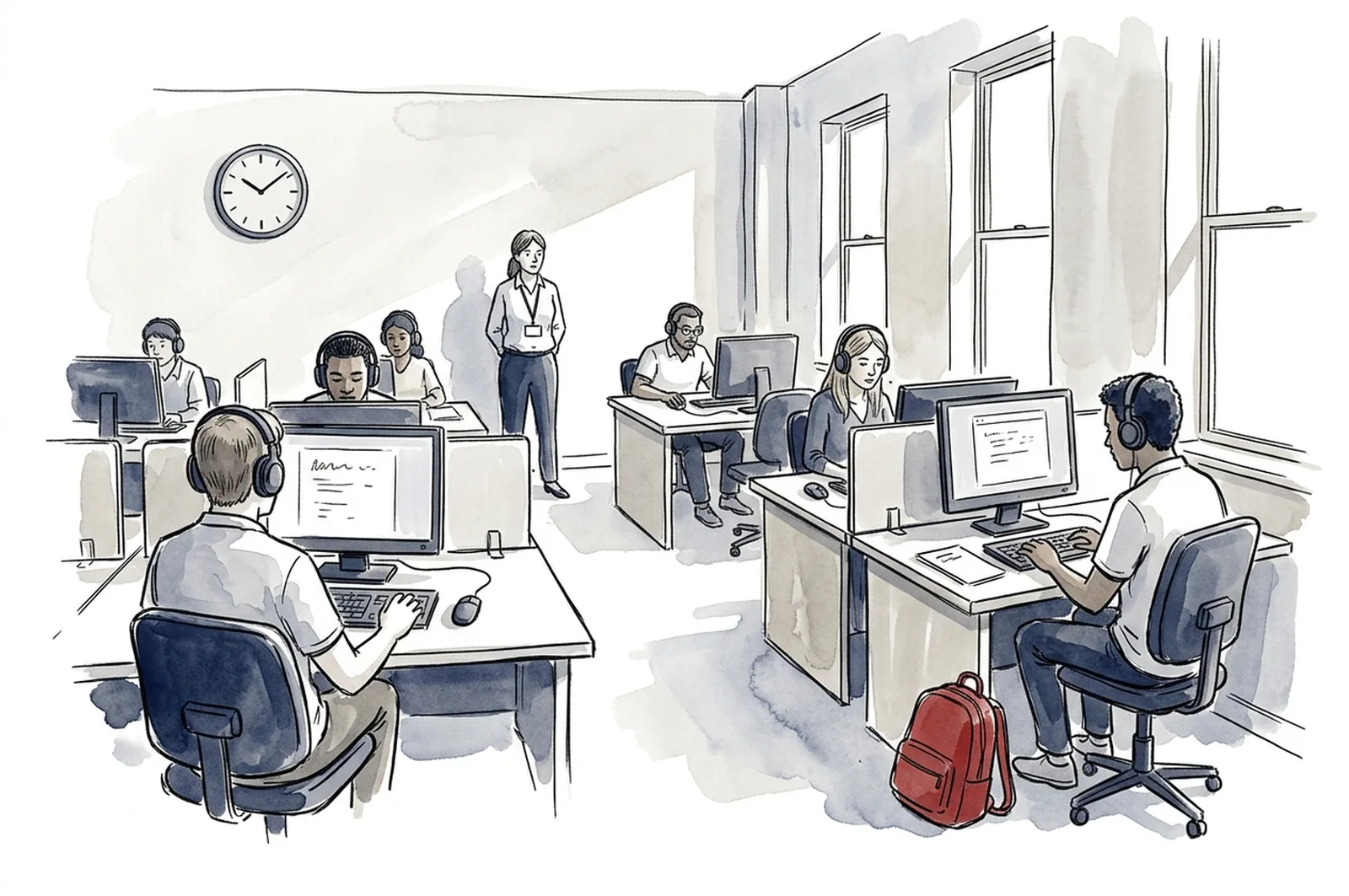
The compréhension orale is the first of the four tests on the day. At the centre you sit at a computer with headphones (a few centres still run the paper version with a shared speaker), the invigilator starts the test, and the 39 questions follow one another at the pace of the recordings. You cannot go back. If you have not yet chosen between the two tests IRCC accepts, read TEF vs TCF first: the TEF listening test has 40 questions in 40 minutes and a different question style, which we cover in our TEF Canada compréhension orale guide.
| Element | TCF Canada compréhension orale |
|---|---|
| Questions | 39 multiple-choice questions, 4 options, 1 correct answer |
| Duration | about 35 minutes, set by the recordings (in our mock the 39 recordings total 29 minutes of audio; the rest is the answer gaps) |
| Plays | one, with no pause and no going back |
| Order | increasing difficulty, A1 to C2, in six blocks |
| Picture questions | the first block: one picture on screen, four sentences heard, pick the one that matches |
| Documents | everyday exchanges, public announcements, phone calls, then radio interviews, reports and commentary |
| Scoring | one score from 100 to 699, no negative marking, converted to NCLC by IRCC |
| Weight | one of four skills; each skill gives its own NCLC, and your profile is capped by the lowest |
Pro tip: Read the four options in the two or three seconds before the recording starts. The options tell you what to listen for: a place, a reason, a time, a feeling. Listening with a question in mind is the whole difference between catching the answer and catching the words.
How the Compréhension Orale Is Scored
France Éducation International gives one score from 100 to 699 for the listening test, with the CEFR level it corresponds to on the attestation. The score is computed from the number of correct answers against the difficulty of each item, not a flat point per question, which is why FEI does not publish a “28 out of 39 = B2” table. There is no negative marking: a wrong answer scores the same as no answer, so you answer every question. IRCC then reads the score with the table below.
| Listening score | NCLC | What it means for Express Entry |
|---|---|---|
| 549–699 | 10 or more | Maximum language points for French |
| 523–548 | 9 | Strong profile for the French-language category draws |
| 503–522 | 8 | Comfortable margin above the threshold |
| 458–502 | 7 | The threshold: French-language category draws and the additional points for French |
| 398–457 | 6 | Not enough for the French-language draws |
| 369–397 | 5 | Francophone Mobility level, not Express Entry level |
| 331–368 | 4 | Below every immigration threshold |
On the CEFR side, FEI’s scale runs A1 100–199, A2 200–299, B1 300–399, B2 400–499, C1 500–599, C2 600–699. NCLC 7 therefore sits in the upper half of B2 and NCLC 9 is already a C1 score: a candidate who answers the B1 and B2 blocks well and guesses the rest will usually land at NCLC 6 or 7. The C1 block is where NCLC 8 and 9 are decided.
Results arrive in about fifteen working days, the attestation is valid for two years, and you must wait at least twenty days between two sittings. A listening score is not re-corrected: the answers are machine-marked.
The Question Types, Level by Level
The 39 questions come in six blocks that follow the CEFR levels. Knowing which block you are in tells you how much of the recording you need to understand and how the distractors are built.
A1: one picture, four sentences
One photograph or drawing on screen, four short sentences read one after the other (A, B, C, D), one question: which sentence matches the picture? The distractors describe three other situations that share a word or a setting with the picture. A birthday cake on screen, then « Bon anniversaire, maman », « Le plat est trop chaud », « Non merci, pas de cadeau » and « Maman, je peux en avoir ? »: the whole sentence, not the word « maman », picks the answer.
A2: short exchanges and the right reply
Still pictures for the first A2 items, then a new type: you hear a question or a statement (« Vous avez de la place disponible ? »), and you choose the reply that fits among four, all of them grammatically fine and all of them starting with « Oui ». The right one answers the question that was actually asked.
B1: dialogues, announcements and the first real questions
From B1 the recording is a dialogue of three to six turns or a public announcement, followed by a spoken question: where, why, what must the person do. The four options are written, and the answer is a paraphrase of what was said, never the same words. « Vous devez prendre l’escalier » becomes « Monter à pied ». Training yourself to hear the idea and not the vocabulary starts here.
B2: radio extracts and reports
Forty-five seconds to a minute of a radio interview, a report or a conversation with a complication: a phone line that cannot be transferred because the works are late, a job seeker who moved for her partner. The question asks for the reason, the cause or the complaint, and two of the four options are true details from the recording that do not answer the question. This block decides NCLC 7.
C1 and C2: long extracts, abstract answers
A minute or more of a sociologist, a critic, a teacher or a columnist speaking at natural speed, often with a conversational register and a few idioms. The question is about the speaker’s position or reservation, and the options restate it in abstract terms: « la portée des réhabilitations est limitée », « la réalisation de soi par le travail est devenue une obligation ». You rarely need every word; you need the one sentence the whole extract was leading to, and the ability to hear a paraphrase of it.
TCF Canada Listening Practice: 17 Questions With Audio
These 17 questions are taken from our TCF Canada listening mock test 05, in test order, with the same six blocks as the real paper. Each player works like the test: press « Play once », answer in your head or on paper, then open the answer to see the key phrase, the vocabulary and the full transcript, and to replay the recording as often as you like. The 22 remaining questions of the same mock are in the free PDF below.
Niveau A1 : une image, quatre phrases
Question 1Niveau A1 · image · 0:15
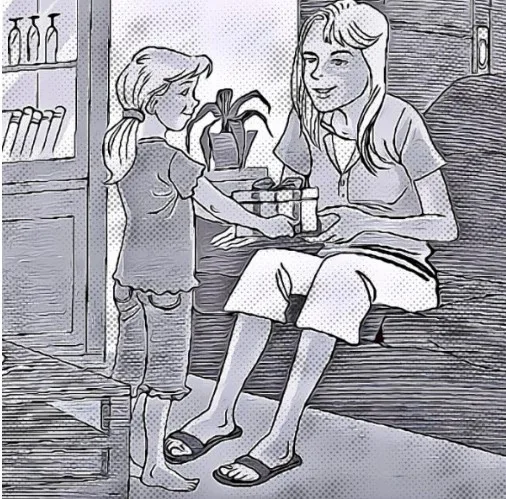
Quelle phrase correspond à l’image ?
- APhrase A
- BPhrase B
- CPhrase C
- DPhrase D
Show the answer and the transcript
Answer: C
This phrase corresponds to a scene of celebration, such as offering a birthday gift or cake to a mother.
Phrase clé : « Bon anniversaire, maman. »
Vocabulaire : anniversaire = birthday · chaud = hot · envie = desire / want · attention = careful / watch out
Question 3Niveau A1 · image · 0:21

Quelle phrase correspond à l’image ?
- APhrase A
- BPhrase B
- CPhrase C
- DPhrase D
Show the answer and the transcript
Answer: A
The speaker is asking for permission to sit (‘s’asseoir’). This matches the visual context of finding a seat.
Phrase clé : « Je peux m’asseoir ici? »
Vocabulaire : s’asseoir = to sit down · ici = here · chien = dog · prochain = next
Niveau A2 : images et courts échanges
Question 6Niveau A2 · image · 0:13
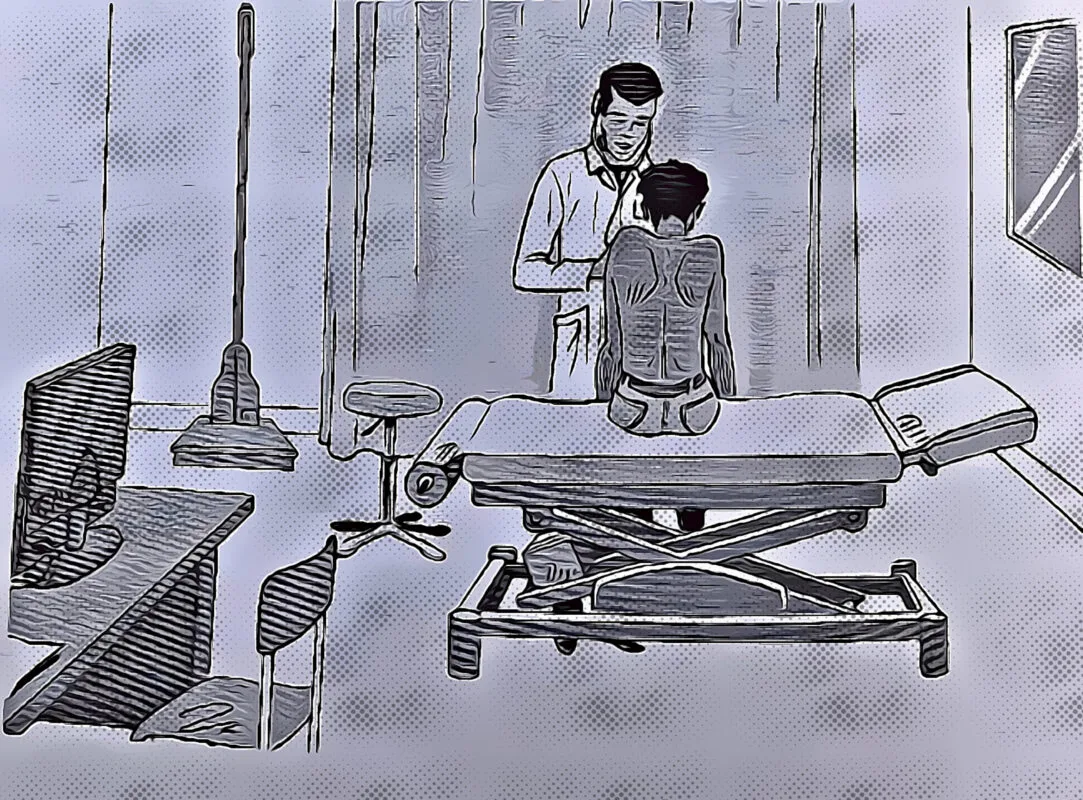
Quelle phrase correspond à l’image ?
- APhrase A
- BPhrase B
- CPhrase C
- DPhrase D
Show the answer and the transcript
Answer: D
‘Respirez bien fort’ means ‘Breathe very deeply.’ This corresponds to a medical examination scene where a doctor is checking a patient’s breathing.
Phrase clé : « Respirez bien fort. »
Vocabulaire : baissez = lower · enlevez = take off / remove · installez-vous = settle in / have a seat · respirez = breathe · fort = deeply / strongly
Question 8Niveau A2 · image · 0:14
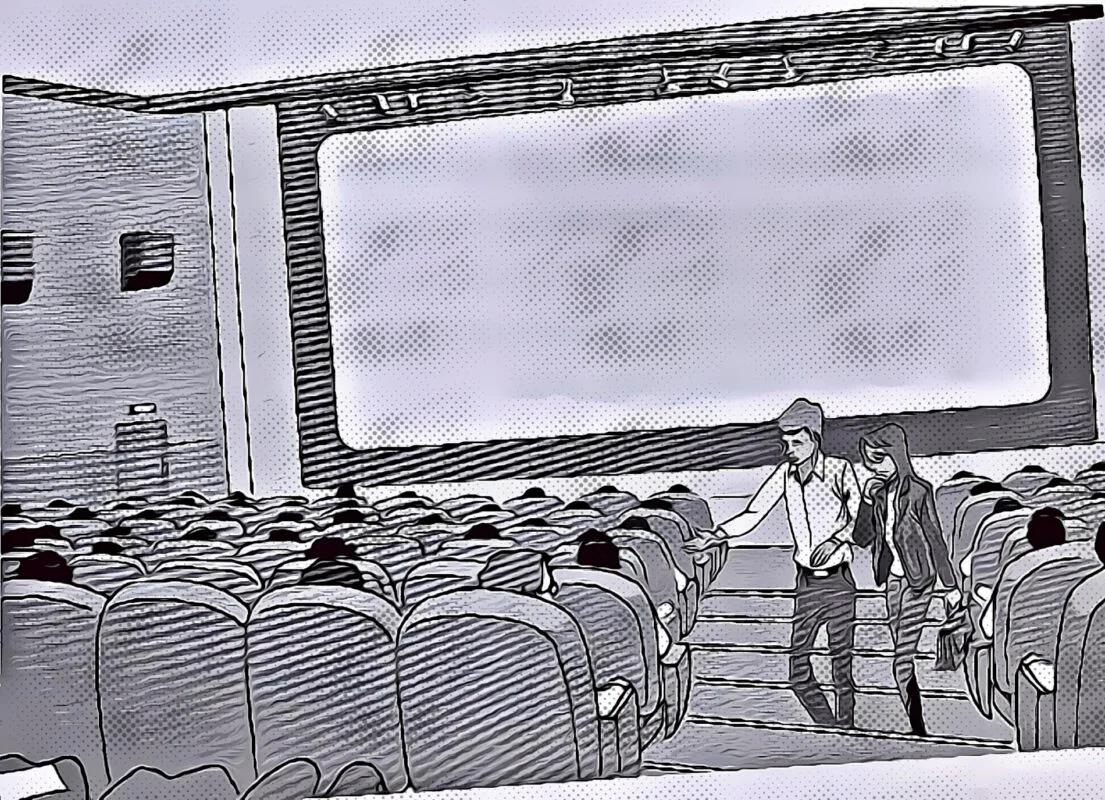
Quelle phrase correspond à l’image ?
- APhrase A
- BPhrase B
- CPhrase C
- DPhrase D
Show the answer and the transcript
Answer: D
Directly matches the visual action of two or more people finding a place to sit, commonly found in cinema or theater contexts.
Phrase clé : « Viens, on va s’asseoir là. »
Vocabulaire : s’asseoir = to sit down · billets = tickets · publicité = advertising · formidable = wonderful/great
Question 9Niveau A2 · short exchange · 0:26
Quelle réponse convient ?
- AOui, il y a des chambres libres.
- BOui, le centre ville est très proche.
- COui, le petit déjeuner est compris.
- DOui, nous avons un parking privé.
Show the answer and the transcript
Answer: A · Oui, il y a des chambres libres.
The response directly addresses the question about availability by confirming there are free rooms.
Phrase clé : « Vous avez de la place disponible? »
Vocabulaire : réserver = to book · disponible = available · chambres libres = free rooms · compris = included
Niveau B1 : dialogues et annonces
Question 12Niveau B1 · audio · 0:32
Que doit faire la personne pour se rendre au bureau 309 ?
- AAller au 2e étage.
- BMonter à pied.
- CPrendre l’ascenseur.
- DPasser par la cafétéria.
Show the answer and the transcript
Answer: B · Monter à pied.
Since the elevator is broken, the instruction ‘prendre l’escalier’ (take the stairs) means the person must walk up.
Phrase clé : « Vous devez prendre l’escalier au bout du couloir. »
Vocabulaire : étage = floor · en panne = out of order · escalier = stairs · au bout = at the end
Question 13Niveau B1 · audio · 0:41
Que veulent faire ces personnes samedi s’il ne pleut pas ?
- AInviter des amis chez elles.
- BRendre visite à un ami.
- CFaire des courses.
- DManger en plein air.
Show the answer and the transcript
Answer: D · Manger en plein air.
The primary plan is a ‘pique-nique’ (picnic), which is by definition a meal eaten outdoors (‘Manger en plein air’).
Phrase clé : « Alors c’est d’accord, nous faisons un pique-nique samedi prochain. »
Vocabulaire : pique-nique = picnic · en plein air = outdoors · s’il pleut = if it rains · cela dépendra = it will depend · maison de campagne = country house
Question 16Niveau B1 · audio · 0:56
Selon l’intervenant, qu’est-ce qui explique les troubles du comportement ?
- AUn emploi du temps surchargé.
- BUn encadrement trop rigide.
- CUn manque d’activités de plein air.
- DUn usage excessif des écrans.
Show the answer and the transcript
Answer: C · Un manque d’activités de plein air.
The speaker explicitly states that behavioral problems are linked to the fact that children ‘play outside much less’ and are not connected with nature.
Phrase clé : « Or, de plus en plus d’études scientifiques font un lien direct entre le fait que les enfants n’aient même pas de temps libre, n’aient pas de jeu libre et ne jouent pas dehors, ne sont pas en lien avec la nature qui les environne. »
Vocabulaire : extérieur = outside · troubles de comportement = behavioral problems · plein air = open air / outdoors · environne = surrounding · lien = link
Question 17Niveau B1 · audio · 0:28
Quelle est la fonction de cette annonce publique ?
- APrévenir d’un danger.
- BSignaler le départ d’un train.
- CAnnoncer l’arrivée d’un train.
- DAvertir d’un incident.
Show the answer and the transcript
Answer: A · Prévenir d’un danger.
The announcement explicitly warns passengers to be careful (‘attention’) of a physical risk (‘la marche’) for their safety.
Phrase clé : « Pour votre sécurité, attention à la marche en descendant du train. »
Vocabulaire : sécurité = safety · attention = watch out / careful · marche = step / gap · descendant = getting off / descending · prévenir = to warn
Niveau B2 : extraits de radio et récits
Question 20Niveau B2 · audio · 0:55
Que dit cette intervenante au sujet du travail à Londres ?
- ALe recrutement se fonde sur l’expérience.
- BLes salaires à l’embauche sont très élevés.
- CL’évolution professionnelle est très lente.
- DL’obtention d’un premier emploi est aisée.
Show the answer and the transcript
Answer: A · Le recrutement se fonde sur l’expérience.
The text states that recruiters look mostly at “positions you have already held,” which refers to professional experience.
Phrase clé : « On va surtout regarder les postes que vous avez déjà occupés. »
Vocabulaire : changer de job comme de chemise = to change jobs like changing shirts (very easily) · postes = positions/jobs · occupés = held/occupied · franchir les étapes = to climb the steps (career advancement) · diplôme = diploma/degree
Question 22Niveau B2 · audio · 1:13
Que propose le site dans lequel cet intervenant travaille ?
- ADes activités en faveur du développement durable.
- BDes formations aux nouveaux métiers de l’éducation.
- CDes sorties équestres pour les écoliers de la région.
- DDes stages à destination des animateurs jeunesse.
Show the answer and the transcript
Answer: A · Des activités en faveur du développement durable.
The text explicitly mentions ecology, eco-gestures, and preserving the planet, which are core components of sustainable development.
Phrase clé : « Notre entrée thématique, c’est l’écologie au quotidien, les éco-gestes, les astuces qu’on peut mettre en place dans notre vie de tous les jours pour participer à la préservation de la planète. »
Vocabulaire : écoéducateur = eco-educator · être à cheval = to bridge the gap / to be between (idiom) · sensibiliser = to raise awareness · préconisées = recommended · se cantonner = to be confined to / to limit oneself to · éco-gestes = eco-friendly actions / eco-gestures
Question 25Niveau B2 · audio · 0:56
Les journalistes évoquent une tendance qui concerne les Français. Laquelle ?
- AIls aiment passer leurs vieux jours dans le sud de la France.
- BIls osent davantage partir à l’étranger qu’auparavant.
- CIls payent plus d’impôts que les autres citoyens européens.
- DIls prennent des cours de langue pour améliorer leur niveau.
Show the answer and the transcript
Answer: B · Ils osent davantage partir à l’étranger qu’auparavant.
The phrase ‘n’ont plus peur’ (no longer afraid) corresponds to ‘osent davantage’ (dare more), and ‘partir à la conquête du monde’ matches ‘partir à l’étranger’ (go abroad).
Phrase clé : « Oui, tous ces français que l’on dit nuls en anglais, ils n’ont plus peur de partir à la conquête du monde. »
Vocabulaire : partir à la conquête = to set out to conquer · nuls = bad / hopeless · franchissent = cross · fiscalité = taxation · asphyxiante = suffocating
Question 28Niveau B2 · audio · 0:45
Comment la jeune fille a-t-elle passé sa soirée ?
- AElle est sortie en boîte de nuit.
- BElle a dîné avec sa famille.
- CElle est restée toute seule.
- DElle a vu un mauvais film.
Show the answer and the transcript
Answer: C · Elle est restée toute seule.
After the cinema was cancelled, she went home and went to bed, meaning she ended up spending the evening alone.
Phrase clé : « Alors je suis rentrée, je me suis couchée. »
Vocabulaire : j’avais pas le moral = I wasn’t in the mood · aller danser = to go dancing · la séance = the screening · annulée = cancelled · je me suis couché = I went to bed
Niveau C1 : entretiens et analyses
Question 30Niveau C1 · audio · 0:58
Selon le locuteur, à quoi servent les notes à l’école ?
- AÀ classer les établissements selon un taux de performance.
- BÀ communiquer sur les progrès de l’élève dans chaque matière.
- CÀ créer une échelle lisible de classification des élèves.
- DÀ susciter chez l’élève l’envie de devenir le meilleur de la classe.
Show the answer and the transcript
Answer: C · À créer une échelle lisible de classification des élèves.
The text explicitly states grades are used to visualize hierarchies and determine student levels, which equates to creating a readable classification scale.
Phrase clé : « Elles servent à visibiliser les hiérarchies à l’intérieur de la classe. »
Vocabulaire : les notes = grades · visibiliser = make visible · hiérarchies = hierarchies · faire le tri = to sort / sorting · redoublement = repeating a year
Question 33Niveau C1 · audio · 1:18
Quelle était la préoccupation de la comédienne au début de sa carrière ?
- AAugmenter la fréquentation des théâtres.
- BCréer une troupe de théâtre indépendante.
- CDéterminer les nouveaux enjeux du théâtre.
- DJouer dans des pièces de théâtre inédites.
Show the answer and the transcript
Answer: C · Déterminer les nouveaux enjeux du théâtre.
The speaker focuses on the ‘meaning’, the ‘why’, and the target audience of theatre. In a professional context, questioning the purpose and social role of an art form is synonymous with determining its ‘enjeux’ (stakes/issues).
Phrase clé : « Je me demandais moins comment il fallait le faire, mais surtout pourquoi il fallait le faire et à qui on s’adressait. »
Vocabulaire : itinéraire = career path / itinerary · engagé = engaged / committed (politically/socially) · sens = meaning · enjeux = stakes / issues
Niveau C2 : chroniques et débats
Question 37Niveau C2 · audio · 1:04
Quelles réserves le sociologue Renaud Epstein émet-il ?
- ALes bâtiments restaurés sont en nombre insuffisant.
- BLes cités réaménagées sont surtout résidentielles.
- CLes municipalités privilégient les projets coûteux.
- DLes réhabilitations ont une portée limitée.
Show the answer and the transcript
Answer: D · Les réhabilitations ont une portée limitée.
The speaker argues that changing the physical buildings (schools, facilities) does not automatically improve the services provided within them. Therefore, the impact of the renovation is limited to the structure and fails to address the ‘quality of service,’ limiting its overall scope.
Phrase clé : « Parfois, on a pu rebâtir des écoles, mais ça ne change pas nécessairement les moyens qui sont mis à disposition de ces écoles pour réaliser leurs missions. »
Vocabulaire : plébiscitée = acclaimed / popular · le bâti = the built environment / physical structures · aux dépens de = at the expense of · portée = scope / reach · enjeu = issue / stake
Question 39Niveau C2 · audio · 1:19
Selon le chroniqueur, pourquoi l’expression États-Unis d’Europe est-elle tabou ?
- AElle est trop éloignée des orientations politiques actuelles.
- BElle fait référence à des événements historiques douloureux.
- CElle fait ressurgir des rivalités ou des antagonismes oubliés.
- DElle remet en cause la domination faite de certains pays.
Show the answer and the transcript
Answer: A · Elle est trop éloignée des orientations politiques actuelles.
The transcript states that the idea behind the United States of Europe ‘is not at all on the agenda’ (‘n’est pas du tout à l’ordre du jour’), meaning it is too far removed from current political orientations. Supporters avoid the expression because it would break a consensus and provoke conflicts — all signs that it clashes with the present political reality.
Phrase clé : « L’idée véhiculée par les États-Unis d’Europe, c’est-à-dire des États soumis à un pouvoir fédéral, n’est pas du tout à l’ordre du jour. »
Vocabulaire : tabou = taboo · querelles = quarrels/disputes · susciter = stir up/provoke · véhiculée = conveyed · rompre avec = break with
How to Improve Your TCF Listening Score
The method for one-play listening is different from the method for a podcast you can rewind. These are the habits our tutors drill in the preparation course, in the order they pay off.
- Read the options before the recording starts. They are on screen a few seconds early. Scan the four, decide what kind of answer you are listening for (a place, a reason, an opinion), and keep that question in your head.
- Listen for the idea, not the words. From B1 the correct option is always a paraphrase. If an option repeats a word you heard, it is more often a trap than the answer.
- Do not stop on a word you missed. The recording keeps going. Candidates lose more questions by freezing on one unknown word than by not knowing it.
- Note numbers, times, names and negations. « ne … pas », « plus », « jamais » flip the meaning of an option. In long extracts, the one sentence that answers the question often comes after a « mais » or an « en fait ».
- Answer, then let the question go. There is no going back, so a wrong answer costs one point and a question you are still thinking about during the next recording costs two.
- Train with varied voices. The recordings use several speakers, male and female, at natural speed, with the register of radio and everyday conversation. Daily French-language radio and news in French, fifteen minutes a day with a question in mind, builds the ear faster than any list.
- Time your practice. Take a full 39-question paper in one sitting at least once a week in the last month. The second half of the test is where tired candidates lose points they knew.
Mistakes That Cost Points
- Reading the options for the first time during the recording. You then listen to neither. Read first, listen second.
- Choosing the option that repeats a word from the audio. At B1 and above, that is the distractor by design.
- Leaving a question blank. There is no negative marking. A guess among four is worth a quarter of a point on average; a blank is worth nothing.
- Panicking after the picture block. The jump from A2 pictures to B1 dialogues feels sudden. It is the same for everyone and it is built into the scoring.
- Translating in your head. By the time the French sentence is English, the next one has gone. Train yourself to hold meaning in French, even approximately.
- Confusing the speaker’s words with the speaker’s point. At C1 and C2 the question is about the position or reservation, and the correct option is abstract. Ask yourself « qu’est-ce qu’il veut dire ? », not « qu’est-ce qu’il a dit ? ».
- Ignoring the register. « Un look d’enfer », « changer de job comme de chemise », « être à cheval entre » appear in B1 and B2 recordings. Everyday idioms are part of the test.
Free TCF Canada Mock Tests
The five free TCF Canada mock tests in our student portal include the full listening paper this page is drawn from: 39 questions, one-play audio, the answer gaps, the score at the end. Fill in the form and your login arrives by email in a few minutes.
Download the PDF: TCF Canada Compréhension Orale, 22 Questions d’Entraînement avec Corrigés
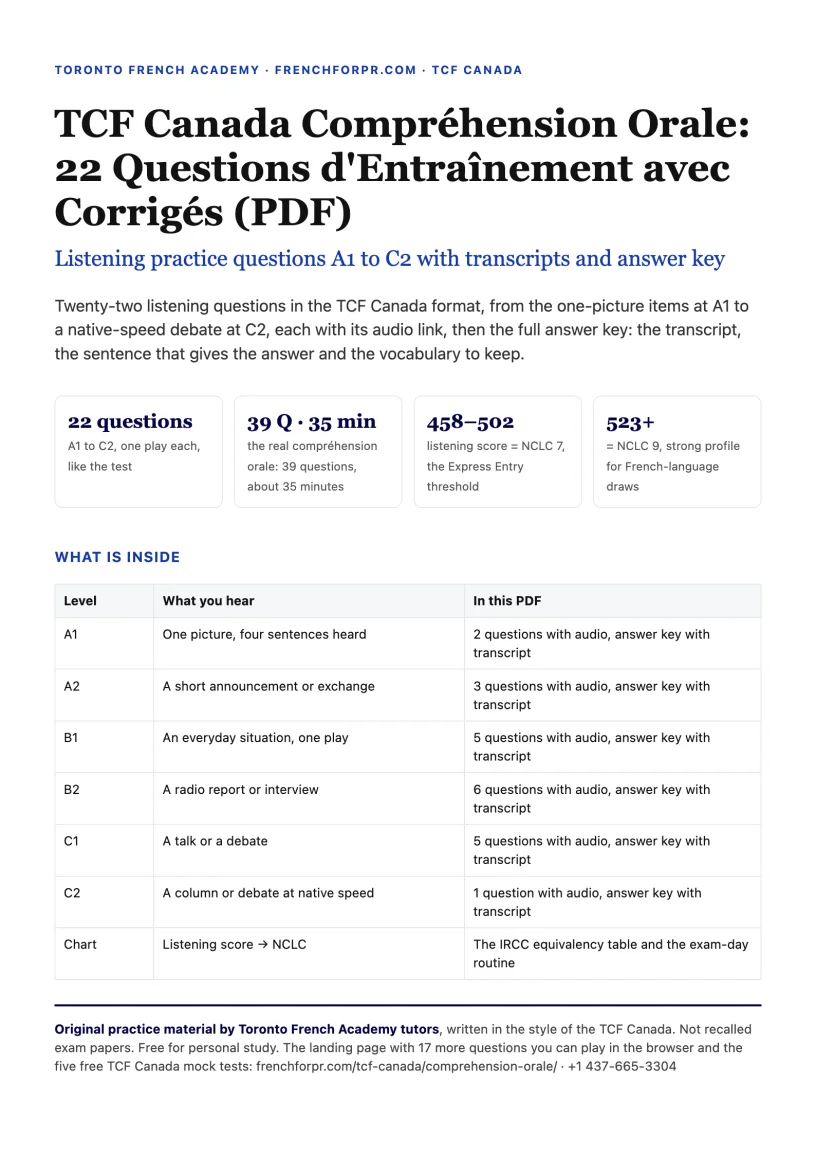
TCF Canada Compréhension Orale: 22 Questions d’Entraînement avec Corrigés (PDF)
- 22 more questions from the same mock test, none of them on this page: 4 picture items (A1–A2), then 1 A2, 5 B1, 6 B2, 5 C1 and 1 C2 recording
- A link to the audio of every question, so you can play each recording once, on your phone, from the printed page
- The answer key with the full transcript, the key phrase that gives the answer and the vocabulary of each recording
- The listening score to NCLC table and the exam-day routine for one-play audio
Enter your name and email and the download link arrives in your inbox.
Your details stay with Toronto French Academy. No spam, ever.
FAQ : la compréhension orale du TCF Canada
Comment améliorer sa compréhension orale au TCF ?
Lisez les quatre options avant le début de l’enregistrement, écoutez l’idée et non les mots (la bonne réponse est presque toujours une reformulation), ne vous arrêtez pas sur un mot inconnu, et répondez à chaque question même en cas de doute, puisqu’une mauvaise réponse n’enlève aucun point. Entre deux séances, quinze minutes par jour de radio ou d’actualités en français, avec une question en tête, font progresser l’oreille plus vite que n’importe quelle liste de vocabulaire. Les 17 questions de cette page et les 22 du PDF reproduisent les six blocs de l’épreuve.
La compréhension orale du TCF est-elle difficile ?
Elle est surtout exigeante par son format : un seul passage de chaque enregistrement, aucun retour en arrière, et une difficulté qui monte de A1 à C2 en 39 questions. Les premières questions sont accessibles à un débutant ; les dernières demandent de comprendre la position d’un intervenant qui parle une minute à vitesse naturelle. Le NCLC 7 (458 à 502 points) se joue dans le bloc B2, le NCLC 9 (523 à 548) dans le bloc C1.
Comment se déroule l’épreuve de compréhension orale du TCF Canada ?
C’est la première épreuve de la journée. Installé devant un ordinateur avec un casque (quelques centres utilisent encore la version papier), vous entendez 39 enregistrements à la suite, chacun une seule fois, suivis d’une question à quatre options. Les premières questions montrent une image et font entendre quatre phrases, dont une seule lui correspond ; viennent ensuite des échanges courts, des dialogues, des annonces, puis des extraits de radio de plus en plus longs. L’épreuve dure environ 35 minutes et donne un score de 100 à 699.
La compréhension orale du TEF est-elle plus facile que celle du TCF ?
Les deux épreuves sont calibrées pour mesurer les mêmes niveaux, et l’IRCC les accepte au même titre. Elles diffèrent par le format : le TEF Canada compte 40 questions en 40 minutes avec plusieurs types de tâches (associer des images à des messages, repérer une information précise), le TCF Canada 39 questions en 35 minutes, toutes à quatre options et par ordre de difficulté croissante. Les candidats qui aiment une structure prévisible préfèrent souvent le TCF ; ceux qui ont du mal avec les longs extraits C1 et C2 trouvent parfois le TEF plus confortable. Notre comparatif TEF vs TCF détaille les deux.
Quel score au TCF correspond au NCLC 7 ?
En compréhension orale, le NCLC 7 correspond à un score de 458 à 502 sur 699. En compréhension écrite, il faut 453 à 498. Pour l’expression orale et l’expression écrite, notées sur 20, le NCLC 7 correspond à 10 ou 11. Le NCLC 7 dans les quatre compétences est le seuil des tirages de la catégorie francophone d’Entrée express et des points supplémentaires pour le français. Le tableau complet est sur notre grille des scores du TCF Canada.
Lequel est plus difficile, le TEF ou le TCF ?
Aucun des deux n’est plus facile au sens de la notation : les deux tests sont étalonnés sur les mêmes niveaux et convertis en NCLC par l’IRCC. La différence tient au candidat. Le TCF Canada a une structure unique et prévisible (quatre options, difficulté croissante, pas de retour possible) et des épreuves d’expression plus courtes ; le TEF Canada varie davantage les types de questions et laisse un peu plus de temps en compréhension orale. Passez un test blanc de chacun avant de réserver : c’est le seul moyen fiable de savoir lequel vous convient.
Où trouver des exemples de questions de compréhension orale du TCF Canada en PDF ?
Le PDF gratuit de cette page contient 22 questions du même test blanc que les 17 questions ci-dessus, avec le lien audio de chaque enregistrement, le corrigé, la phrase clé et la transcription complète. Les cinq tests blancs gratuits du portail étudiant de Toronto French Academy proposent l’épreuve complète, chronométrée, avec l’audio à écoute unique.
Prepare the TCF Canada Listening Test With Toronto French Academy
Our TCF Canada preparation course works the listening test the way the test works: one full 39-question paper a week under test conditions, then a correction session with a C1/C2 tutor that goes back to every recording you missed and names the paraphrase you did not hear. The students who move from NCLC 6 to NCLC 8 in listening are the ones who do that correction every week, which is why the course is built around it. The expression orale is prepared in the same classes.
Programs
We offer live online French classes on Google Meet taught by our 200+ certified tutors.
| Program | Classes a month | Days a week | Format | Price | Average time from A1 to B2 |
|---|---|---|---|---|---|
| Group Classes | 20 one-hour classes | 5 | 6 to 8 students | $249 per month | 10 to 12 months |
| Individual Classes | 12 one-hour private classes | 3 | Private | $369 per month | 8 to 10 months |
| Fast-Track Individual Classes | 20 one-hour private classes | 5 | Private | $549 per month | 6 to 8 months |
Most of our TCF candidates take evening classes after work; the Fast-Track program is the one we recommend when the test is booked for less than three months away.
Book a 60-minute demo class with a C1/C2 instructor to see how we work and get an assessment of your current level.
Keep reading

Simar Dua, French Program Lead
Simar leads the TEF Canada and TCF Canada programs at Toronto French Academy and has guided hundreds of Express Entry candidates from their first French lesson to the NCLC 7 result. She hosts the academy’s free monthly French for Canada PR info session.