French classes in Toronto: the formats
Three ways to take French classes with us in Toronto. All three follow the same A1-to-B2 syllabus and the same exam training; what changes is the room and the number of students.
| Format | Where | Class size | When | Price |
|---|---|---|---|---|
| In-person group classes | North York centre, Yorkdale | 6–8 | Morning and evening cohorts, Monday to Saturday | $249 / month |
| Online group classes | Live on Google Meet | 6–8 | Monday to Friday, mornings or evenings | $249 / month |
| Private 1-on-1 classes | At either centre or online | 1 | Mornings 8 am–12 pm, evenings 8 pm–12 am, Mon–Fri | $369 / month |
Every format includes the books and materials, mock TEF and TCF tests, weekly corrected writing and speaking tasks, and a recording of every online class.
Our two Toronto centres: North York and downtown
North YorkTFA – French Classes Toronto
Yorkdale Shopping Centre, 3401 Dufferin St, North York, ON M6A 2T9
Phone+1 365-293-6330
HoursMonday to Saturday, 9 am to 9 pm
TransitYorkdale station (Line 1), about five minutes away; Dufferin and Lawrence buses stop at the mall
DrivingOff Allen Road, 1.5 km from the 401 at Dufferin; parking at the mall
Google4.9 ★ from 135 reviews · Directions
DowntownToronto French Academy
1100 University Ave, Toronto, ON M5J 2H7
Phone+1 437-665-3304
HoursMonday to Friday, 9 am to 9 pm
TransitUniversity Avenue, on Line 1; a short walk from St Andrew and Union stations
Google4.4 ★ from 94 reviews · Directions
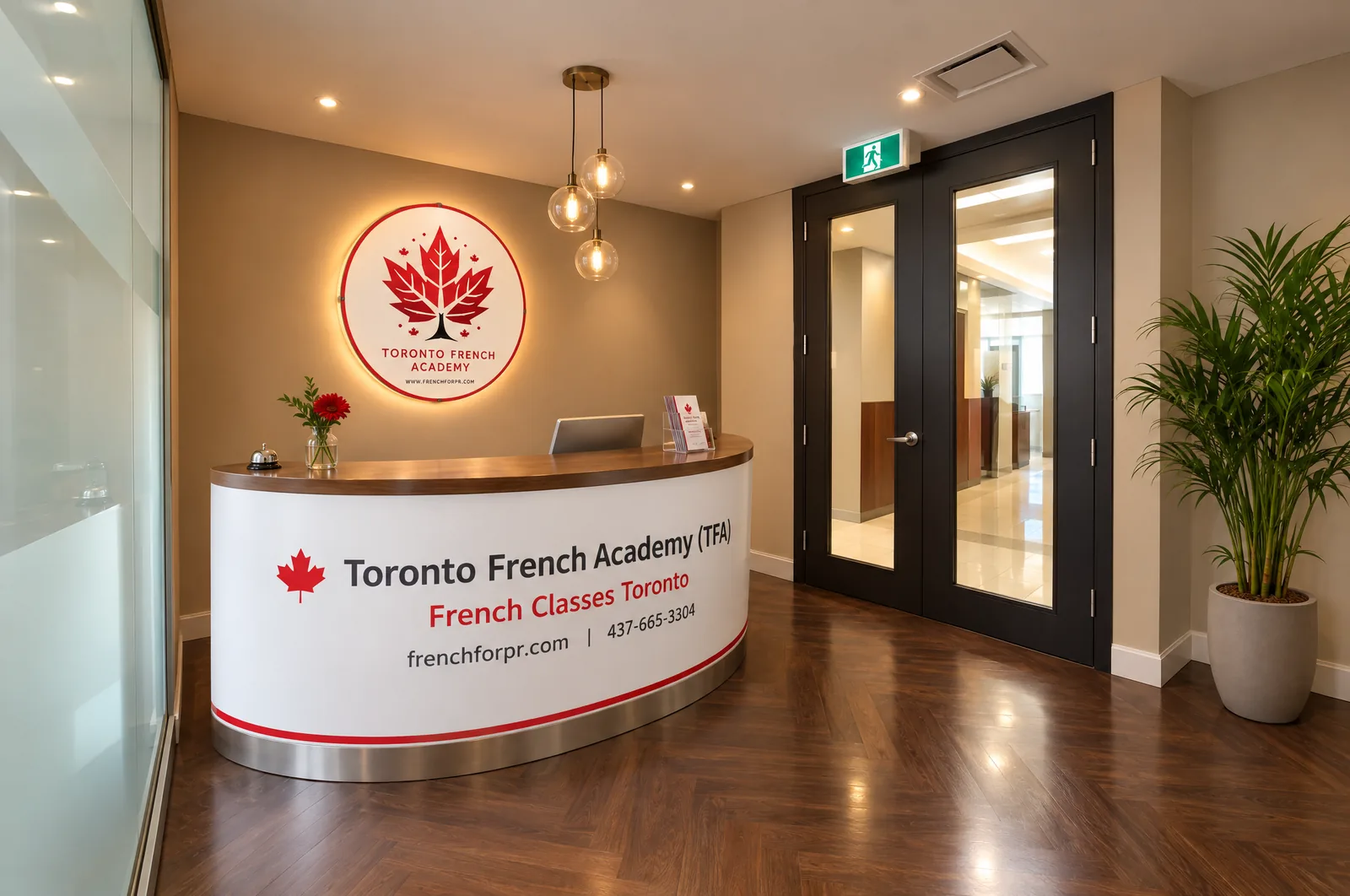
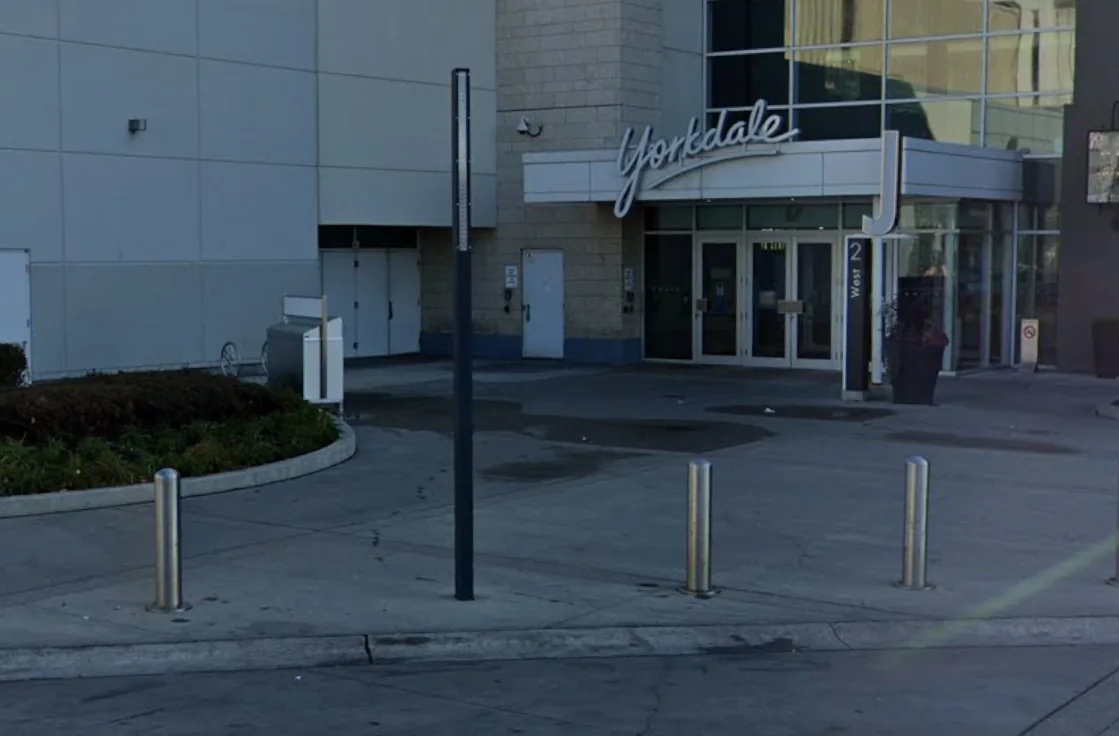
Students come to the North York centre from across the city and from Vaughan; the downtown centre serves people who work in the core. If the trip does not work for your week, the same teachers run the same classes live online, and many students mix the two.
Inside a French class in Toronto
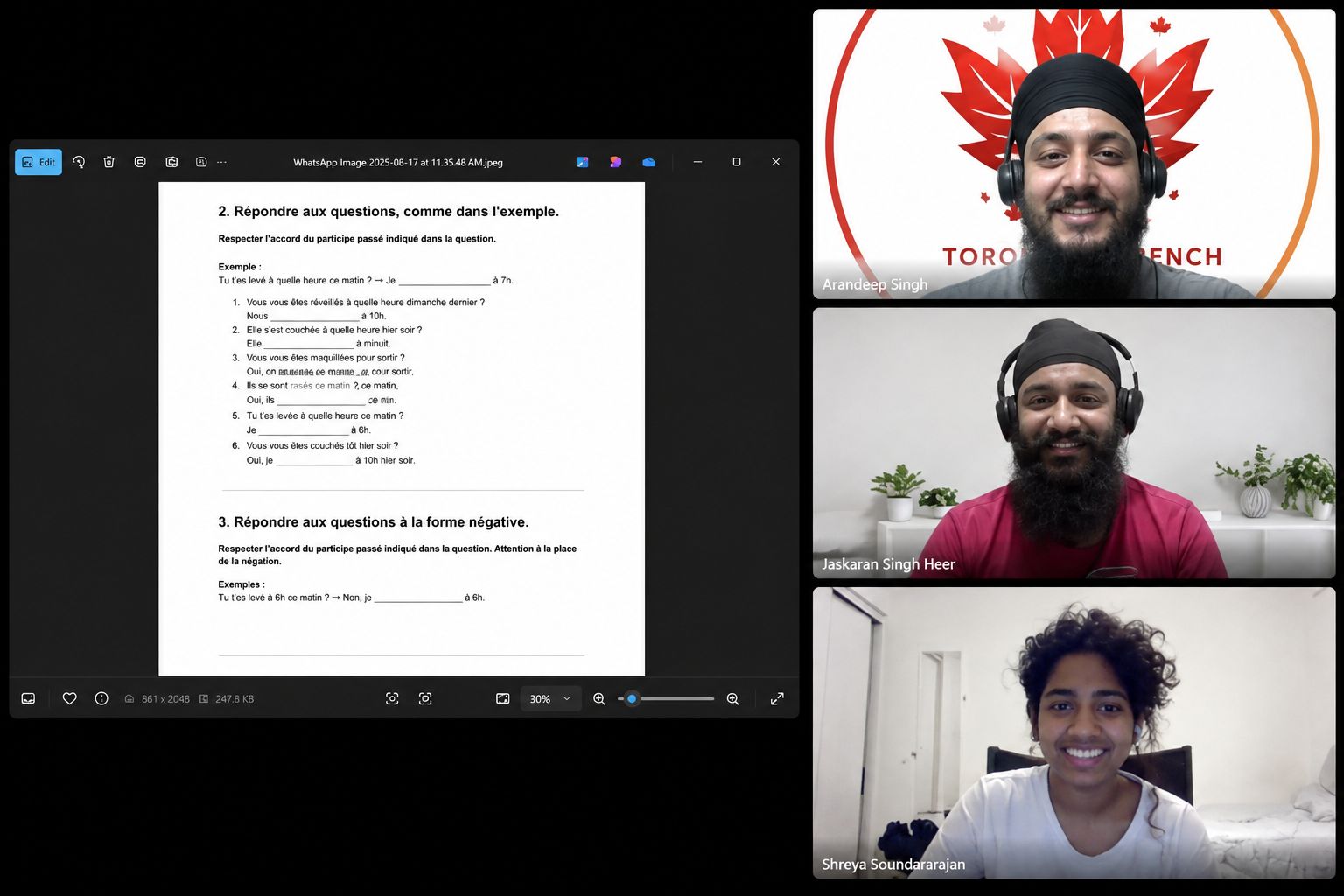
A class is one hour, in French from the first minute. The teacher runs the day’s lesson, you speak, and your mistakes get corrected as they happen rather than at the end. Each week you hand in one writing task and one speaking task and get them back with corrections.
- Small groups. Six to eight students, so everyone speaks in every class. Past eight, speaking time per student collapses; that is the number we hold to.
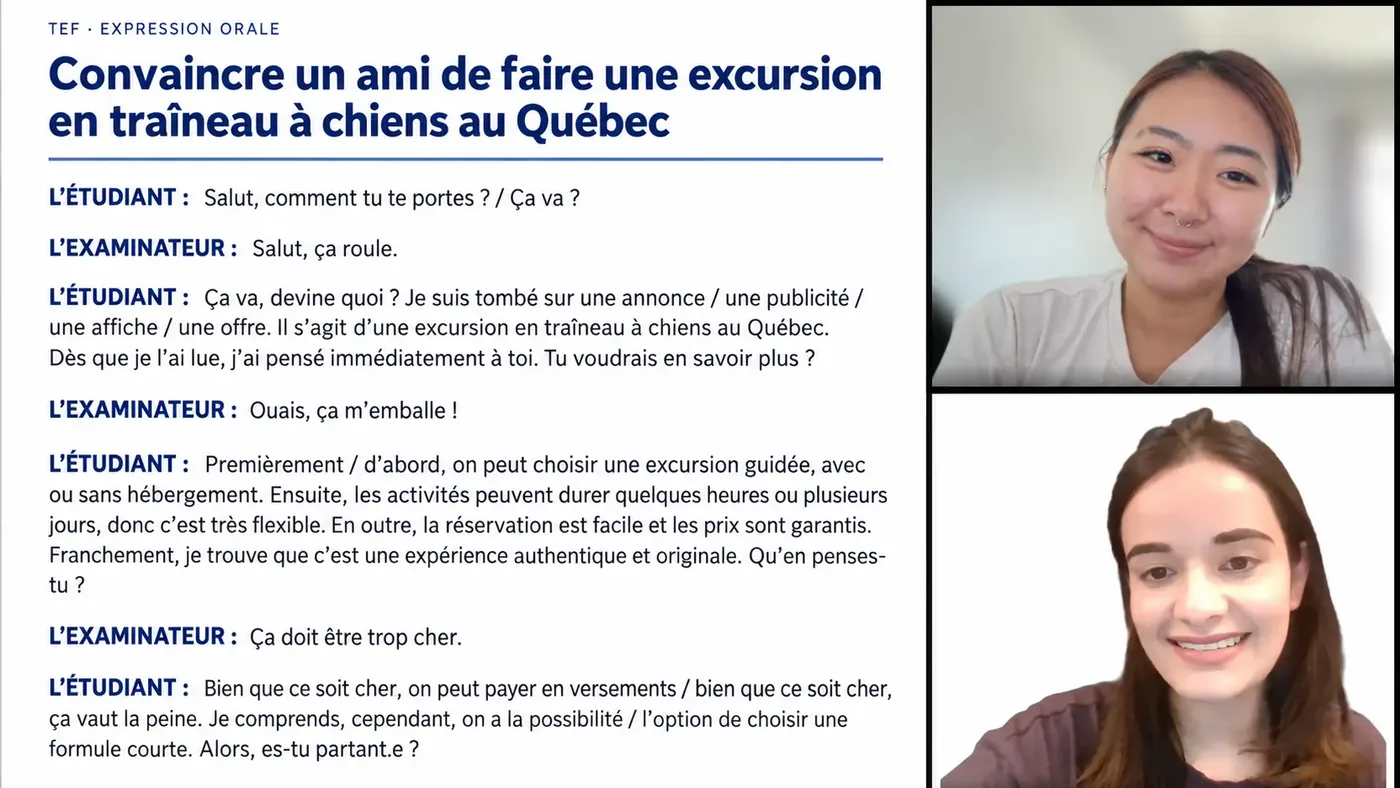
- Exam formats from the start. If your goal is CLB 7, the class trains the actual TEF and TCF task types: the expression orale role-plays, the expression écrite letter and article, timed listening and reading sets, with regular mock tests.
- Homework that gets marked. Assignments after every class, tests at the end of each unit, and a progress check at every level change.
- A recording of every online class and the slides for every in-person one, so a missed week is not a lost week.
Pro tip: Keep one notebook for the sentences your teacher corrects. Reviewing it before each class is the fastest way to stop repeating the same errors, and it is the single habit our CLB 7 students share.
French courses in Toronto from A1 to B2
In group classes a level takes about 100 to 120 class hours: 20 classes a month for five to six months. Here is what each one covers.
- A1 and A2: beginner French.Reading, basic conversation, the present and past tenses, the vocabulary of daily life in Canada. Most adults starting from zero take five to six months per level in group classes. Course page: beginner French classes A1–A2.
- B1: intermediate French.Longer conversations, opinions, the subjunctive, workplace and newcomer situations. B1 is the point where the TEF and TCF task formats enter the classes. Course page: intermediate and advanced classes B1–B2.
- B2 and exam preparation.B2 is the level behind CLB 7 in all four skills. Classes become exam-shaped: timed sections, scored mocks, corrected speaking and writing every week. Course pages: TEF Canada preparation and TCF Canada preparation.
Not sure which level you are? The free level assessment at the start of the demo class places you, and you can read the level descriptions on our French levels page.
Who our Toronto French classes are for
- Express Entry and PR candidates. CLB 7 in French adds up to 50 CRS points and opens the French-language draws, which have been running at cut-offs far below the general rounds (every round is on our French draw tracker). This is the majority of our Toronto students, and the whole syllabus is built around the two exams IRCC accepts: TEF Canada and TCF Canada. Which one to sit is a real decision; our TEF vs TCF comparison walks through it.
- Newcomers settling in Toronto. Adults who need working French for a job, a licensing exam or a bilingual role. Groups mix levels of experience but never levels of French.
- Working professionals. Classes that fit around a 9-to-5: evening groups, and private slots from 8 am or from 8 pm that hold for the months it takes to reach B2. See also French courses for working professionals.
- Students and parents. Adults preparing for a French-language program or helping a child in French immersion. (We teach adults; for children we recommend the school boards’ programs.)
Meet the teachers
Toronto French Academy’s roster is 50-plus tutors: native French speakers from France and the wider francophone world alongside C1 and C2-certified teachers trained on the TEF Canada and TCF Canada formats. These are some of the teachers behind the Toronto classes, in person and online; the ratings and quotes are from their students’ Google reviews, the credentials from their TFA profiles.
Anil Serou
★ 4.8Native speaker, born in France · Licence in applied foreign languages
Exceptional with TEF & TCF.
“He’s very caring for his students and accommodates the classes based on your knowledge and level.”
Diljaan Singh, September 2025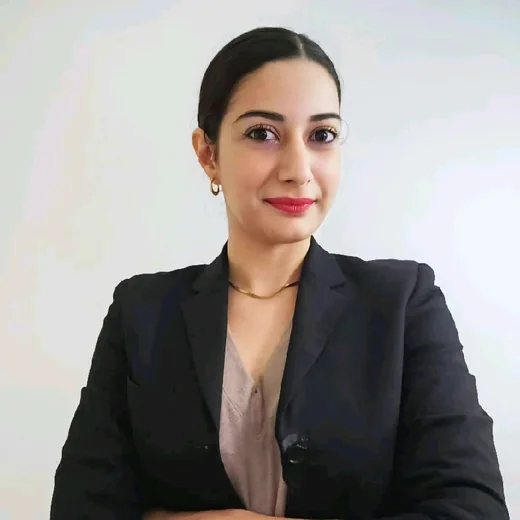
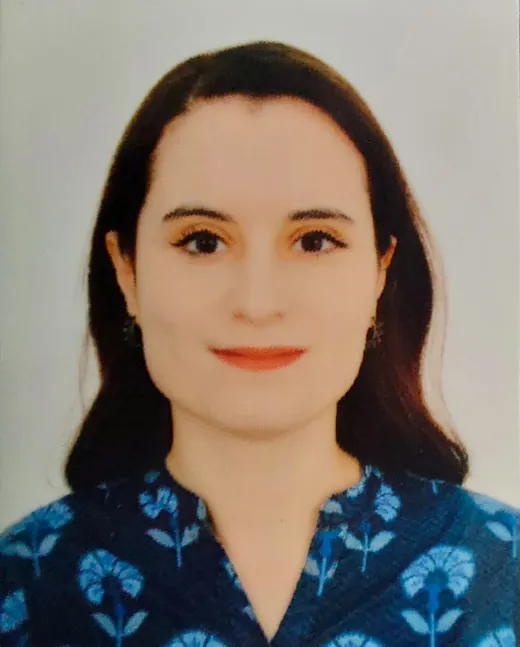
Sarra Hamidouche
Native speaker · Master’s in French literature, 10+ years teaching
Conversation-first classes where every student talks in every session.
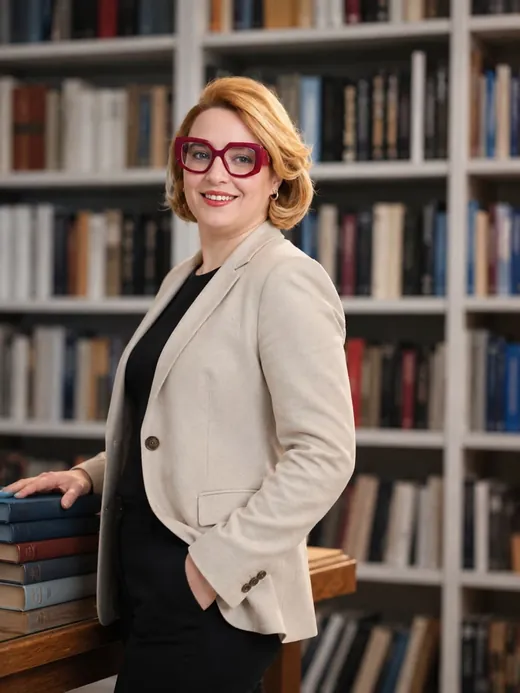
Yasmine Redjimi
Native speaker, C2 · Raised with French at home
Classes where you are expected to take risks and make mistakes out loud, then fix them.
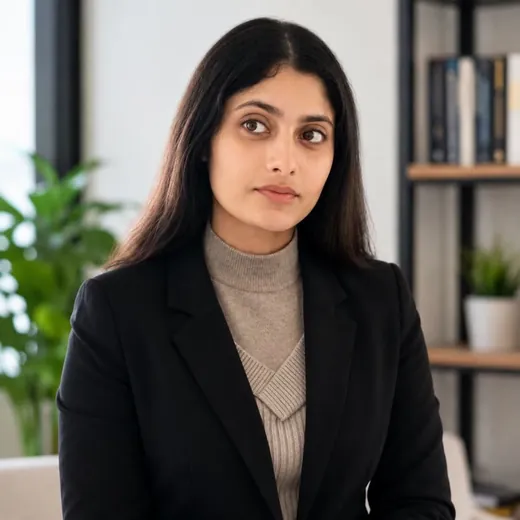
Feriel Gouri
★ 5.0Native speaker, DALF C2 · Master’s in the history, languages and civilisation of France
Author of the Le Français Pas à Pas series and TEF Oral Pas à Pas; fluency first, exam technique on top.
Monika Kaushik
★ 4.9DELF B2, Advanced Diploma in French
Specialized in TEF Canada and TCF Canada preparation.
“My tutor, Monika, is thorough, diligent, and very well spoken. She explains concepts clearly and in a way that’s easy to comprehend.”
Nick Kovrigin, September 2026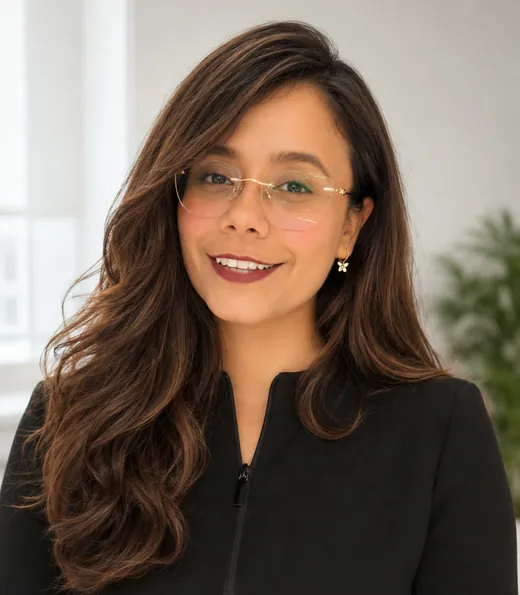
Divya
★ 4.9DELF (Alliance Française), 9 years teaching
TEF and TCF exam strategies that stick.
“She is very patient and engaging and makes the classes both enjoyable and highly effective.”
Esteban, October 2025
Also teaching the Toronto groups: native speakers Yashna Ramessur and Lydia Addeche (DALF C2), Felix Peter (fifteen years living and working in France), and Prachi, Aditya, Janvi and Jasneet, who appear throughout the North York reviews. You can switch teachers on request.
Class schedule: mornings, evenings and Saturdays
| Days | Times (Eastern) | Format | |
|---|---|---|---|
| In-person group | Monday to Saturday | Morning and evening cohorts | North York centre, Yorkdale |
| In-person private | Monday to Saturday | 9 am–9 pm, by appointment | North York (Mon–Sat) or downtown (Mon–Fri) |
| Online group | Monday to Friday | Mornings or evenings | Google Meet |
| Private, mornings | Monday to Friday | 8 am–12 pm | Online or in person |
| Private, evenings | Monday to Friday | 8 pm–12 am | Online or in person |
| Weekend | Saturday | At the North York centre, 9 am–9 pm | Private classes; group cohorts when numbers allow |
New group cohorts start at the beginning of every month; private classes start within 24 to 48 hours of enrolling. A group runs for ten to twelve months from A1 to B2; the fast-track private plan does it in six to eight.
French class prices in Toronto
| Program | Price | Classes | Schedule | Best for |
|---|---|---|---|---|
| Group Classes | $249 / month | 20 one-hour classes | Mon–Fri | Structured learning with a cohort |
| Individual Classes | $369 / month | 12 private one-hour classes | 3 days / week | A plan built around you |
| Fast-Track Individual | $549 / month | 20 private one-hour classes | Mon–Fri | The shortest route to CLB 7 |
Prices are per month in Canadian dollars and include books, materials, mock TEF and TCF tests and class recordings. Group classes work out to about $12 an hour, private classes to $27–$31 an hour. For comparison, the downtown Toronto schools that publish rates charge about $27.50 to $35 an hour for group classes.
What our students say


Those are live Google reviews, pulled straight from our profiles. The North York centre sits at 4.9 stars across 135 of them, the downtown centre at 4.4 across 94, and the Brampton profile at 4.7 across more than 430, which puts our three GTA profiles past 660 reviews between them. Every one is on our reviews page and on Google. Two from the North York centre this autumn: “I have improved a lot in just a few weeks” (Metali M., October 2026) and “I have noticed a real improvement in my French skills and confidence” (Baljinder Kaur, August 2026).
How to start: free assessment, then a demo class
- Book a 60-minute demo class.It runs at the time you would take your regular classes, in person at the North York or downtown centre or on Google Meet, with the teacher who would teach you. The first part is a free level assessment; the rest is a real class.
- Pick your format.Group, individual or fast-track, mornings or evenings, in person or online. You get a welcome email with your schedule, your teacher’s introduction and all the materials.
- Start within 48 hours.Private classes are scheduled within 24 to 48 hours; group classes join the next cohort. If the teacher is not the right fit you can switch. If you decide not to continue before your first class, you get a full refund.
French classes in Brampton, Mississauga and across the GTA
Toronto is one of our three locations. Our Brampton centre at 499 Main St S runs the same programs (French classes in Brampton), and students in Peel can start with beginner French in Mississauga. Every program is also available live online anywhere in Canada. Neighbourhood pages: North York, Yorkdale, Scarborough, Etobicoke, downtown Toronto and all locations.
FAQ: French classes in Toronto
Is Toronto French Academy good?
Judge it on things you can check. On Google we hold 4.9 stars from 135 reviews at the North York centre, 4.4 from 94 downtown and 4.7 from more than 430 on the Brampton profile. Outside opinion: Berlitz’s own 2026 guide to French courses in Toronto ranks us third, behind Berlitz and Alliance Française, as the pick for “immigration-focused learners targeting TEF and CRS points”. Results: the TEF Canada and TCF Canada attestations our students send back are on our reviews page. Where we are not the best fit: if you want French for travel or culture with no exam in sight, Alliance Française’s cultural programme may suit you better. If you want CLB 7 by a date, this is what we do all day.
Are there free French classes in Toronto?
Yes, for some people, and you should know about them. LINC/CLIC classes, in person and online through CLIC en ligne, are free for permanent residents and protected persons. Ontario’s school-board programmes, including the TDSB and TCDSB adult French courses, are free if you are a naturalized citizen, a permanent resident, a convention refugee or refugee claimant, an approved provincial nominee, or a work-permit holder with IRCC’s initial approval of PR; the TCDSB runs them online in two terms a year, at NCLC 2 to 6, about 90 hours each. The Toronto Public Library lends textbooks and audio courses for nothing. What none of them do is prepare you for TEF Canada or TCF Canada, keep groups small, or move at the pace an Express Entry timeline needs. If you qualify, take them. If your goal is CLB 7 by a date, add exam-format training on top, which is what our $249-a-month groups are for.
Can I get free French classes on a work permit?
Only in two cases: a letter from IRCC confirming initial approval of your permanent residence, or “Initial approval of PR” printed on the permit itself. Those are the school boards’ own rules, and LINC/CLIC is stricter still. Everyone else on a work or study permit pays, which is why most of our Toronto students are temporary residents preparing for Express Entry.
How much do French classes cost in Toronto?
Group classes in Toronto run from about $12 an hour (our $249-a-month group plan, 20 classes) to $27.50–$35 an hour at the downtown schools that publish rates. Private lessons cost $27 to $31 an hour with us and $50 to $70 an hour at most Toronto schools, with marketplace tutors from about $20. Our prices include books, mock tests and recordings.
Is there an intensive French course in Toronto that fits a full-time job?
Yes. The fast-track plan is 20 private one-hour classes a month, Monday to Friday, in the 8 am to noon or 8 pm to midnight windows, so it runs before or after a 9-to-5 rather than through it. From A1 it reaches B2 in six to eight months instead of the ten to twelve a group takes. If you would rather stay in a group, the evening cohorts at the North York centre and online run on the same weekday rhythm.
Can I learn French in 3 months?
In three months of daily classes you can finish A1 and start A2: greetings, daily life, simple past and future. You cannot reach B2 or CLB 7 in three months from zero. Most of our students reach CLB 7 in eight to ten months of consistent classes; the fast-track private plan takes six to eight. Our guide on how long it takes to learn French gives the month-by-month picture.
How long does it take to reach CLB 7 in French?
From A1, most of our students reach CLB 7 (NCLC 7) in all four skills in eight to ten months of group classes, five days a week, with the private fast-track plan in six to eight. From B1 it is typically four to six months. The scores you need per section are on our CLB 7 guide.
What is the best way for an adult to learn French?
Speak from the first class, in a group small enough that you talk every session, with a teacher who corrects you while you speak rather than in a report afterwards. Hand in one piece of writing and one recording a week and get them back marked. Start the exam formats early instead of “once I am fluent”. Roughly 20 percent of French, the top few hundred words and a handful of tenses, carries most everyday conversation, so our A1–A2 classes are built on that core. Apps are fine for vocabulary between classes; they do not get anyone to CLB 7.
Where in Toronto are the classes, and can I take them online?
Two places. North York: TFA – French Classes Toronto, inside Yorkdale Shopping Centre at 3401 Dufferin St, about five minutes from Yorkdale station on Line 1, with parking at the mall, Monday to Saturday until 9 pm. Downtown: Toronto French Academy, 1100 University Ave, on Line 1 near St Andrew and Union stations, Monday to Friday until 9 pm. The same group and private classes run live on Google Meet, Monday to Friday, mornings and evenings, with the same teachers, materials and mock tests, and many students mix the two.
Which class should I start with?
TEF or TCF: which exam should I take for PR?
Both are accepted by IRCC and both are taught in every class. They differ in the dates offered in Toronto, in the speaking task (TEF Canada uses two role-plays, TCF Canada three tasks) and in how scores map to CLB levels. The choice usually comes down to the next available date and the speaking format you prefer; our TEF vs TCF comparison and the TCF Toronto page walk through both.
Do you teach Québécois French or French from France?
Standard French, which is what TEF Canada and TCF Canada test. Both exams are set in France and their listening sections use speakers from across the francophone world, Quebec included, so you hear Canadian French in class as well. Our teachers are native speakers from France and the wider francophone world alongside Canada-trained teachers; what they share is the exam format and the habit of correcting you while you speak.
Written and checked by
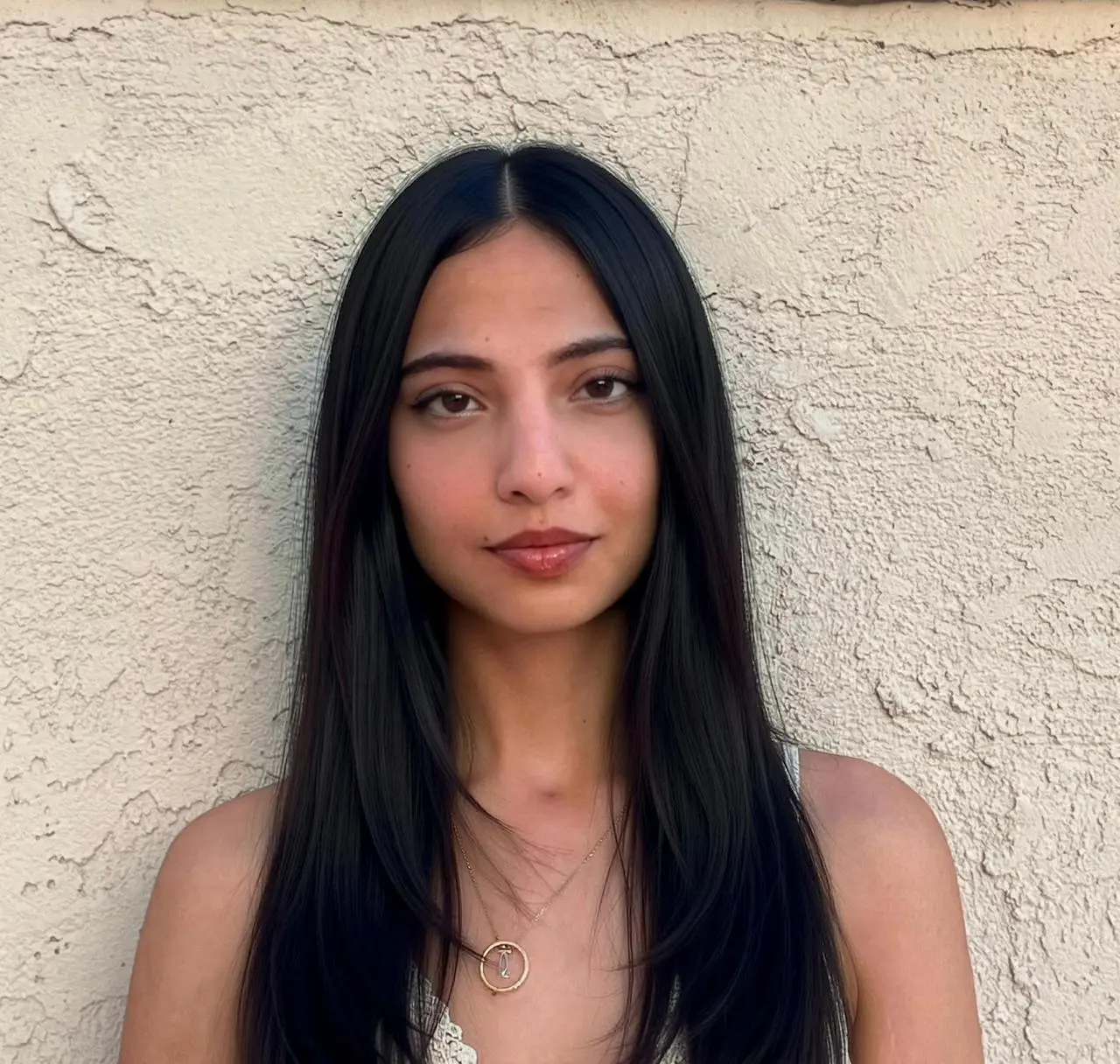
Simar Dua, French Program Lead
Simar leads the TEF Canada and TCF Canada programs at Toronto French Academy and has guided hundreds of Express Entry candidates from their first French lesson to the NCLC 7 result. She hosts the academy’s free monthly French for Canada PR info session.